Have you ever noticed how some brands just feel trustworthy the moment you see them… even if you’ve never used them before?
It’s kind of strange when you think about it.
You haven’t tested the product.
You don’t know the people behind it.
You’ve only just landed on the page.
And yet… something in your mind already says:
“Yeah, this seems legit.”
So what’s actually happening here?
It’s not always design.
It’s not always pricing.
And it’s definitely not always quality.
Most of the time, it’s something much quieter.
Something your brain picks up in seconds without asking your permission.
It’s the signals around the brand.
A café with people waiting outside suddenly feels better than an empty one. A YouTube video with thousands of views feels more reliable than a similar video with almost no engagement. Even an Instagram page with active comments just feels alive compared to a silent one.
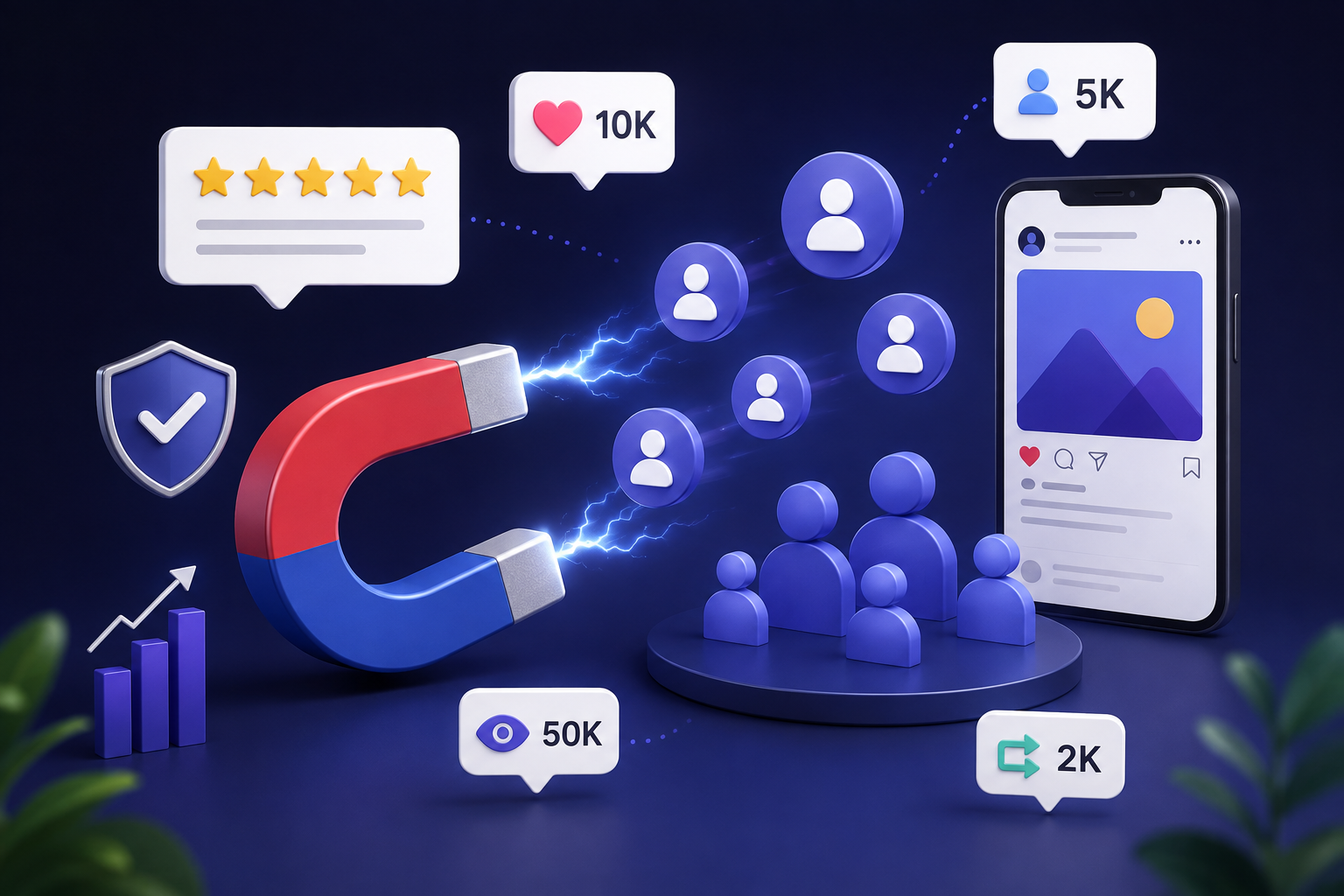
This invisible force is called social proof, and it shapes a huge part of how we decide what to trust online.
What Social Proof Actually Means (In Simple Terms)
At its core, social proof is just this:
We look at what other people are doing to decide what we should do.
When we’re unsure, we don’t like guessing. Nobody does.
So instead of analyzing everything deeply, we take shortcuts.
And one of the biggest shortcuts is:
“If other people trust it, it’s probably safe for me too.”
You’ve done this more times than you realize:
- You check reviews before buying something online
- You look at ratings before choosing a restaurant
- You read comments before watching a video
- You check engagement before following a page
None of these guarantee quality.
But they reduce uncertainty.
And in real life—and especially in marketing—reducing uncertainty is often what creates the first spark of trust.
Why “Popular” Feels Automatically Safer
Here’s something interesting about human behavior:
We don’t always choose what’s best.
We choose what feels safe enough.
So when a brand already looks active or popular, your brain quietly assumes:
“Other people have tried this… so it’s probably okay.”
It’s not a logical decision. It’s a comfort decision.
And that creates a loop:
More people notice the brand →
More people engage with it →
That engagement builds trust →
And that trust attracts even more people.
It keeps feeding itself.
Not because of manipulation, but because humans naturally follow group behavior when they’re unsure.
We feel safer when we’re not alone in a decision.
How Social Media Changed Everything
Before social media, trust was mostly private.
You asked friends.
You listened to family.
You relied on word-of-mouth.
Now?
Trust is visible.
You don’t just hear opinions—you see them happening in real time.
Likes. Comments. Shares. Views. Followers. Reviews.
Each one quietly sends a message:
“People are paying attention here.”
Even if someone doesn’t consciously think about it, their brain still registers it.
And that’s the key.
Because online, people decide in seconds whether something feels worth their time.
That’s why social media isn’t just a marketing tool anymore—it’s often the first impression of a brand.
Why Engagement Feels More Real Than Big Numbers
A lot of people still think success = big numbers.
More followers.
More views.
More reach.
But here’s what actually happens in real life:
People don’t just look at size.
They look at activity.
A page with 100,000 followers but no comments feels strangely empty.
A page with 5,000 active followers can feel alive, real, and trustworthy.
Why?
Because engagement shows behavior.
And behavior feels human.
People talking.
People replying.
People reacting.
That’s what creates real social proof—not just numbers sitting on a screen.
Small Businesses Actually Have an Advantage
There’s a common belief that only big brands can build trust online.
But that’s not true at all.
Small businesses often build trust faster when they do things right.
Why?
Because they feel closer. More real. Less corporate.
Simple things make a big difference:
- Honest customer reviews (even imperfect ones)
- Real testimonials from actual buyers
- Behind-the-scenes content
- Direct replies to messages and comments
- Consistent posting, even if it’s simple
All of this sends one clear message:
“Real people are actually interacting with this brand.”
And that’s what builds credibility.
Not perfection.
Not polish.
Just proof of real experience.
Consistency Builds Quiet Confidence
Think about two brands:
One posted six months ago and disappeared.
The other posts every week, even if it’s simple content.
Which one feels more reliable?
Most people would choose the second one instantly.
Not because the content is better—but because it feels alive.
Consistency tells your audience:
- “We’re still here”
- “We’re active”
- “We care enough to show up”
And in the online world, silence often feels like disappearance.
When people stop seeing you, they slowly stop trusting you.
Not because you did something wrong—but because you stopped being visible.
Where Social Media Marketing Comes In
Good content alone isn’t enough.
If nobody sees it, it doesn’t matter how good it is.
That’s where social media marketing plays a role—not as a shortcut, but as a visibility layer.
It helps brands:
- Reach new audiences
- Stay consistently visible
- Build awareness faster
- Support organic growth
But here’s the important part:
Visibility gets attention.
Content builds trust.
Both are needed together.
Without trust, attention disappears quickly.
Without attention, trust never gets a chance to form.
The Problem With Chasing Vanity Metrics
It’s easy to get distracted by numbers that look impressive.
But not all numbers mean success.
A viral post doesn’t guarantee loyal customers.
A big follower count doesn’t guarantee sales.
A high reach doesn’t guarantee trust.
So instead of asking:
- “How many followers do we have?”
It’s better to ask:
- “Are people actually engaging?”
- “Do customers come back?”
- “Are reviews real and positive?”
- “Do people recommend us naturally?”
Because those answers show the truth.
Brands don’t grow because of numbers.
They grow because of relationships.
Trust Is Built Slowly (And That’s Normal)
There’s no shortcut to becoming a trusted brand.
No hack.
No trick.
No instant formula.
Trust is built through repetition:
- Showing up consistently
- Delivering real value
- Communicating honestly
- Creating good experiences
Over time, all of that turns into something powerful:
Reputation.
And social proof is just the visible layer of that reputation.
Every comment.
Every review.
Every share.
Every mention.
They all add up quietly in the background.
Before someone even talks to you, they’ve already formed an opinion based on what others say about you.
Final Thoughts
At the end of the day, people don’t just buy products.
They buy confidence.
And confidence often comes from seeing that other people already trust something.
That’s the real power of social proof.
It explains why some brands feel instantly credible—even when they’re new—while others struggle despite having a good offer.
But the goal should never be to fake popularity.
It should be to earn real trust… and let that trust be visible.
Because when people see others engaging positively with your brand, they don’t overthink it.
They simply feel:
“Okay… this is safe. I can go ahead.”
And that’s where modern social media marketing stops being just promotion—and starts becoming psychology in action.